
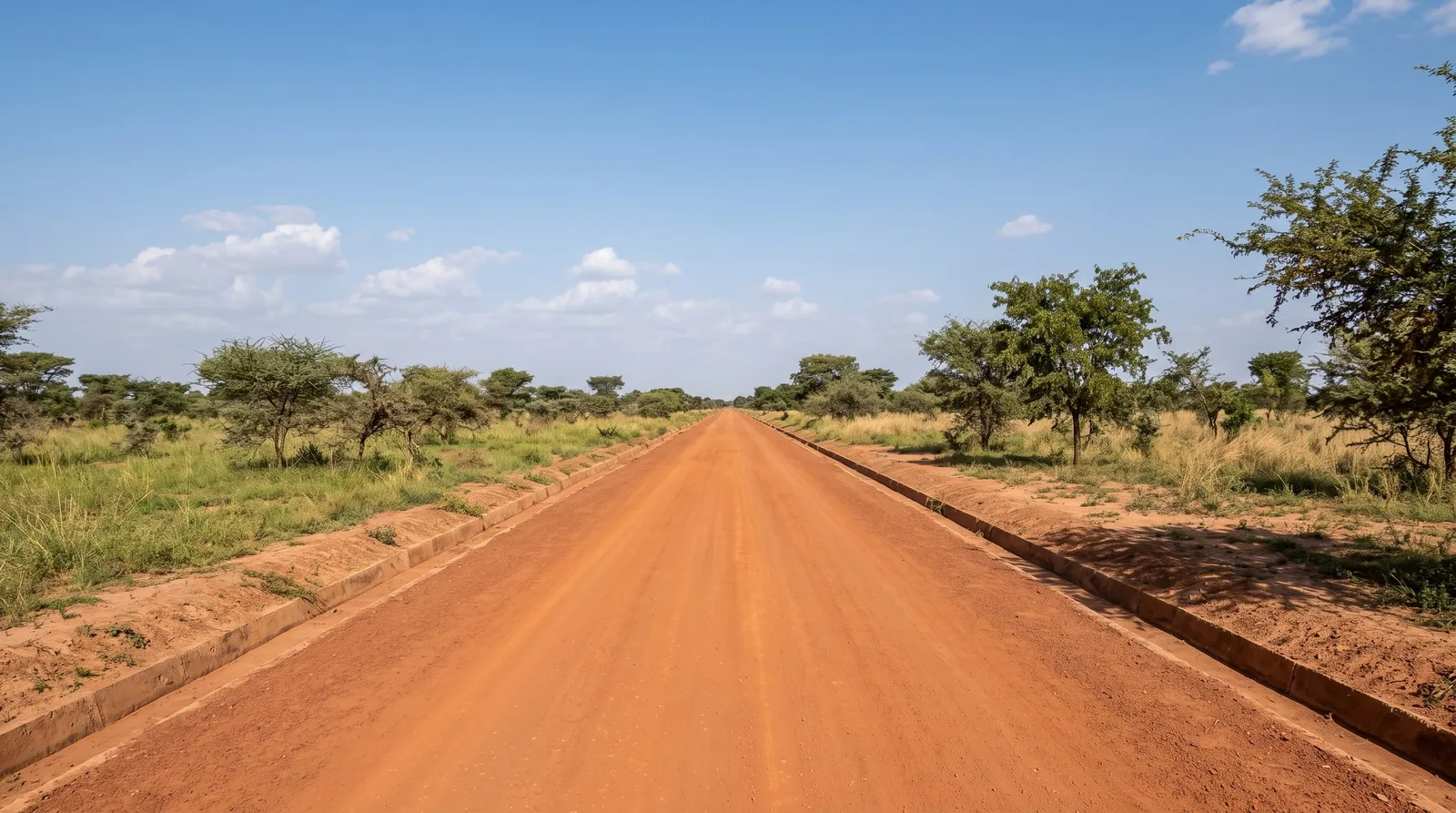
Earth roads make up a large share of Chad’s road network. They are everyday arteries for mobility, trade and access to services — yet they suffer from two opposite problems: dust in the dry season and mud and ruts in the rainy season.
What is soil stabilisation?
Stabilisation treats the local soil itself: a carefully dosed stabiliser is added, then the material is mixed, shaped and compacted into a cohesive layer with higher bearing capacity and better water resistance. The key idea is to improve what is already on site instead of hauling large volumes of material from far away.
What changes on the road
- A bound surface that raises far less dust.
- Better resistance to water infiltration and softening.
- Fewer ruts and potholes after rain.
- Longer service life and lower maintenance costs.
Why everything starts in the laboratory
Every soil is different, so there is no one-size-fits-all recipe. We sample and analyse the soil, test several stabiliser dosages, measure strength before and after water immersion, and select the most suitable formulation before any work on site.
Drainage is part of the solution
A stabilised road also needs the right camber and side drains so that rainwater runs off instead of ponding. Stabilisation plus drainage is what lets a road hold up in both seasons.
This is the core of YUSR’s “Cleaner Air, Safer & Sustainable Roads” initiative, currently in development in N’Djamena.